Clinical Trial Phases Explained: A Complete Guide
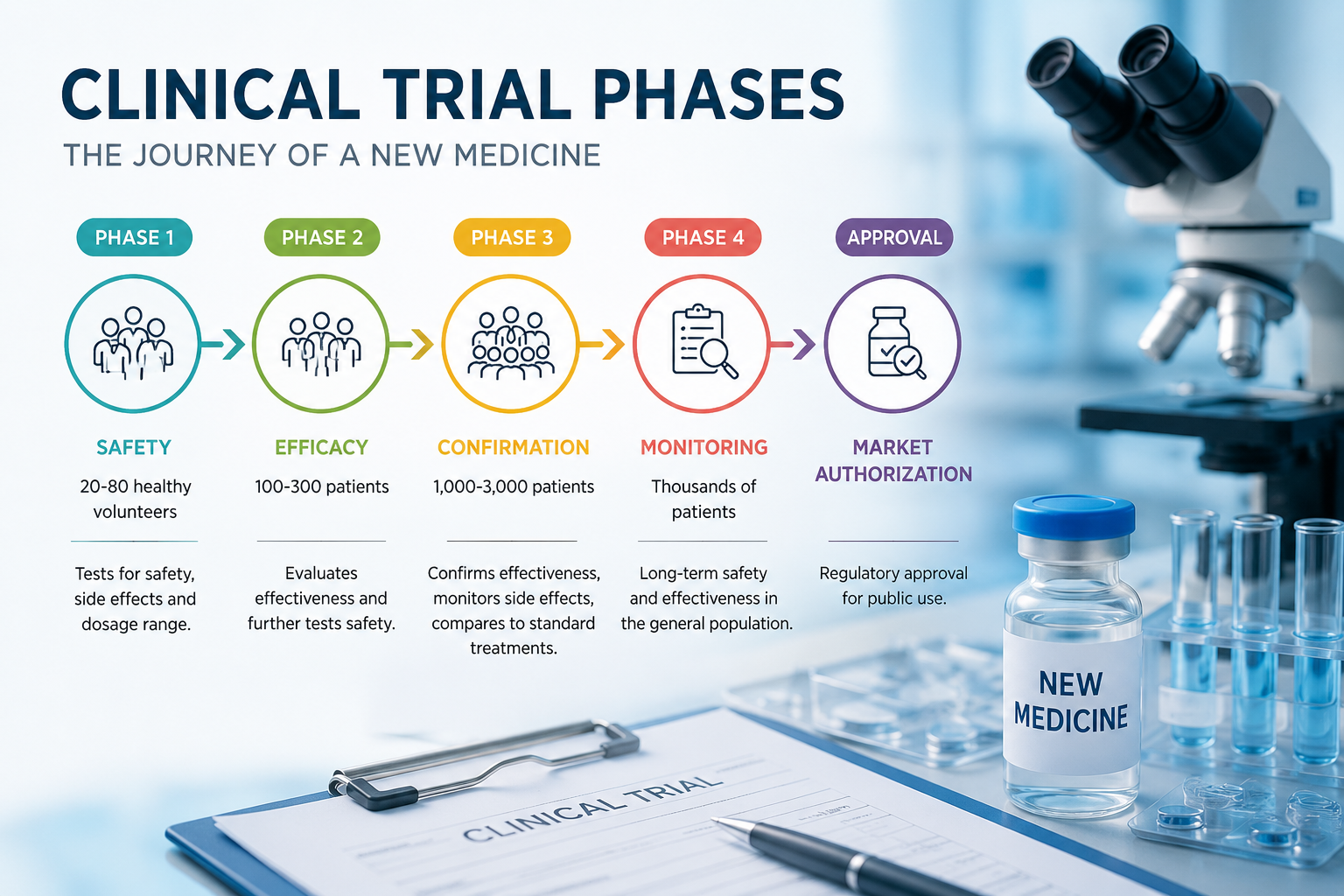
Clinical trials play an important role in advancing modern medicine. Before new treatments, medications, or vaccines become available to the public, they must go through several stages of testing called clinical trial phases. Each phase is designed to answer important questions about safety, effectiveness, side effects, and dosage.
Understanding the phases of clinical trials can help potential volunteers feel more informed and confident about participating in research studies.
In this guide, we’ll break down each phase of a clinical trial and explain why every step matters.
What Are Clinical Trial Phases?
Clinical trial phases are the different stages researchers use to test new medical treatments in humans. These phases ensure that treatments are carefully studied before they are approved for widespread use.
Every new treatment typically goes through four main clinical trial phases:
Phase 1 Clinical Trial
Phase 2 Clinical Trial
Phase 3 Clinical Trial
Phase 4 Clinical Trial
Each phase has a specific purpose and involves different numbers of participants.
Phase 1 Clinical Trial: Testing Safety

A Phase 1 clinical trial is the first time a new treatment is tested in humans. The primary goal of this phase is to evaluate safety.
Researchers closely monitor participants to understand:
Safe dosage levels
Possible side effects
How the body processes the treatment
Early safety concerns
Phase 1 studies usually involve a small group of healthy volunteers or patients, often between 20 to 100 participants.
Although this phase focuses mainly on safety, researchers may also collect early information about how effective the treatment may be.
Key Goal of Phase 1:
Determine whether the treatment is safe enough for further testing.
Phase 2 Clinical Trial: Evaluating Effectiveness
Once a treatment passes Phase 1, it moves into a Phase 2 clinical trial.
In this phase, researchers study whether the treatment actually works for the condition it is designed to treat.
Phase 2 trials usually include a larger group of participants and continue monitoring safety while focusing on effectiveness.
Researchers look for:
Improvement in symptoms
Proper dosage ranges
Common side effects
Overall treatment effectiveness
These studies may involve several hundred participants.
Key Goal of Phase 2:
Evaluate how effective the treatment is while continuing safety monitoring.
Phase 3 Clinical Trial: Confirming Results
A Phase 3 clinical trial is often the largest and most important stage of clinical research.
During this phase, researchers compare the new treatment against existing treatments, placebos, or standard care.
Thousands of participants may join Phase 3 studies across multiple locations.
Researchers use this phase to:
Confirm effectiveness
Monitor side effects
Compare treatment outcomes
Collect additional safety data
If the results are successful, researchers may submit the treatment for approval by regulatory agencies.
Key Goal of Phase 3:
Confirm that the treatment is safe and effective for public use.
Phase 4 Clinical Trial: Monitoring After Approval
After a treatment is approved and available to the public, research may continue through a Phase 4 clinical trial.
This phase helps researchers gather long-term information about:
Rare side effects
Long-term safety
Treatment benefits over time
Real-world effectiveness
Phase 4 studies are important because some side effects or risks may only appear after large numbers of people use the treatment.
Key Goal of Phase 4:
Monitor long-term safety and effectiveness after approval.
Why Clinical Trial Phases Matter

Every clinical trial phase serves a critical purpose in protecting participants and improving healthcare.
Without these carefully monitored stages, researchers would not be able to determine whether treatments are safe and effective.
Clinical trial phases help:
Protect participant safety
Improve treatment quality
Advance medical research
Develop new therapies for patients worldwide
Thanks to clinical research volunteers, many life-saving treatments available today became possible.
Who Can Participate in Clinical Trials?

Participation requirements vary depending on the study.
Some clinical trials look for healthy volunteers, while others require participants with specific medical conditions.
Researchers may consider factors such as:
Age
Gender
Medical history
Current health conditions
Lifestyle factors
Before joining a study, participants go through a screening process to determine eligibility.
Benefits of Participating in Clinical Trials
Many people choose to volunteer for clinical trials for different reasons.
Potential benefits may include:
Access to investigational treatments
Regular health monitoring
Compensation for participation
Helping advance future medical treatments
Supporting scientific research
Participation is always voluntary, and volunteers can ask questions before deciding to join.
Final Thoughts on Clinical Trial Phases
Understanding the different clinical trial phases can help people feel more informed about how medical research works.
From Phase 1 safety testing to Phase 4 long-term monitoring, every stage plays a vital role in developing treatments that improve lives.
Clinical research would not be possible without volunteers who participate in these important studies.
If you are interested in joining a clinical trial, consider reaching out to a trusted research center to learn more about current opportunities.