Know Your Health Numbers: 7 Numbers Everyone Should Understand
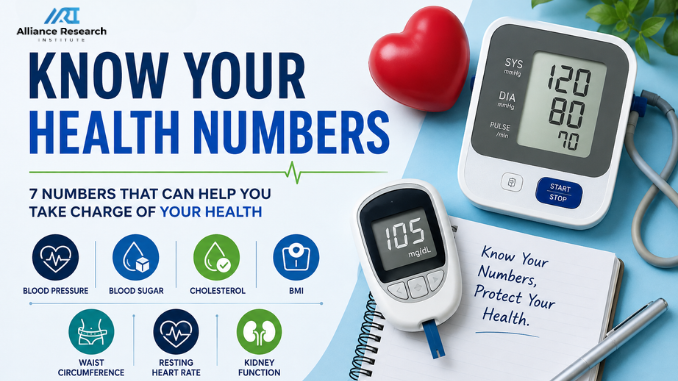
When it comes to your health, numbers can tell an important story. You may feel perfectly healthy, but certain health measurements can reveal potential problems before noticeable symptoms appear.
Learning to know your health numbers can help you have more informed conversations with your healthcare provider and understand what may be happening inside your body.
Here are seven important health numbers worth knowing.
1. Blood Pressure
Blood pressure measures the force of blood pushing against the walls of your arteries as your heart pumps.
It is usually written as two numbers, such as 120/80 mm Hg. The first number is systolic pressure, while the second is diastolic pressure.
High blood pressure, or hypertension, often does not cause obvious symptoms. Over time, uncontrolled high blood pressure can increase the risk of serious health problems, including heart disease and stroke.
Know your number: Ask your healthcare provider how often you should have your blood pressure checked and what range is appropriate for you.
2. Blood Sugar
Blood glucose, or blood sugar, is another important number to understand.
Your body uses glucose for energy, but blood sugar levels that remain too high may indicate a problem with how your body produces or uses insulin.
Depending on your situation, your healthcare provider may check fasting blood glucose or A1C, which provides information about your average blood sugar levels over approximately the previous three months.
Knowing your blood sugar numbers can be particularly important if you have diabetes, prediabetes, or risk factors for developing diabetes.
3. Cholesterol

Cholesterol is a waxy substance your body needs, but having too much of certain types of cholesterol can contribute to plaque buildup in your arteries.
A cholesterol test, often called a lipid panel, may include:
LDL cholesterol
HDL cholesterol
Triglycerides
Total cholesterol
Understanding your cholesterol numbers can help you and your healthcare provider assess your cardiovascular health and determine whether lifestyle changes or treatment may be appropriate.
4. Body Mass Index (BMI)
BMI uses your height and weight to provide a general measurement that can be used to categorize weight status.
While BMI can be useful as one health indicator, it does not tell the complete story about someone's health. It does not directly measure body fat or account for factors such as muscle mass, body composition, or overall health.
Your healthcare provider may consider BMI alongside other measurements when evaluating your health.
5. Waist Circumference
Your waist measurement can provide another useful indication of health risk.
Excess fat around the abdomen has been associated with an increased risk of conditions such as cardiovascular disease and type 2 diabetes.
For this reason, waist circumference may be considered alongside BMI, blood pressure, blood sugar, cholesterol, and other health information.
6. Resting Heart Rate
Your resting heart rate is the number of times your heart beats per minute when you are relaxed.
For many adults, a resting heart rate between 60 and 100 beats per minute is considered a typical range, although individual factors can affect what is normal for you.
Fitness level, medications, stress, illness, caffeine, and other factors can influence your heart rate.
If you notice persistent or unusual changes in your resting heart rate, talk with your healthcare provider.
7. Kidney Function Numbers
Your kidneys help remove waste and excess fluid from your blood. Blood and urine tests can provide important information about how well your kidneys are functioning.
Two commonly discussed measurements are creatinine and estimated glomerular filtration rate (eGFR).
Changes in kidney function may occur without obvious symptoms, making routine testing particularly important for people who have risk factors for kidney disease.
Why You Should Know Your Health Numbers

Knowing your health numbers isn't about memorizing a list of statistics. It's about understanding your health and recognizing changes that may deserve attention.
Your numbers can help you:
Track changes over time
Identify potential health concerns
Have more productive conversations with your healthcare provider
Understand your risk factors
Make informed decisions about your health
Keep in mind that one number doesn't define your overall health. Your healthcare provider will consider your medical history, symptoms, lifestyle, medications, family history, and other factors when interpreting your results.
Don't Wait Until You Feel Sick
Some health conditions can develop without noticeable symptoms. That's why routine checkups and appropriate health screenings are important—even when you feel fine.
The best time to know your health numbers is before a potential problem becomes a bigger one.
Talk with your healthcare provider about which measurements and screenings are appropriate for your age, health history, and individual risk factors.
Take Charge of Your Health
Your health is more than a number—but knowing your numbers can be an important first step toward understanding it.
At Alliance Research Institute, we believe that education and research play an important role in advancing healthcare. Clinical research studies may also provide opportunities for eligible volunteers to contribute to research involving various health conditions.
Know your health. Know your numbers. Take an active role in your well-being.
This article is for educational purposes only and is not a substitute for professional medical advice. Talk with your healthcare provider about your individual health measurements and screening needs.